
Calais to Dover Ferry
The way back to England starts at 285 Avenue du Merite Maritime in Calais. What the return leg needs: the drive to the port, check-in, the UK border on French soil, the crossing and the roads out of Dover.
- About 90 to 100 minutes at sea
- French and UK border checks both in Calais
- Straight onto the A20 in Dover
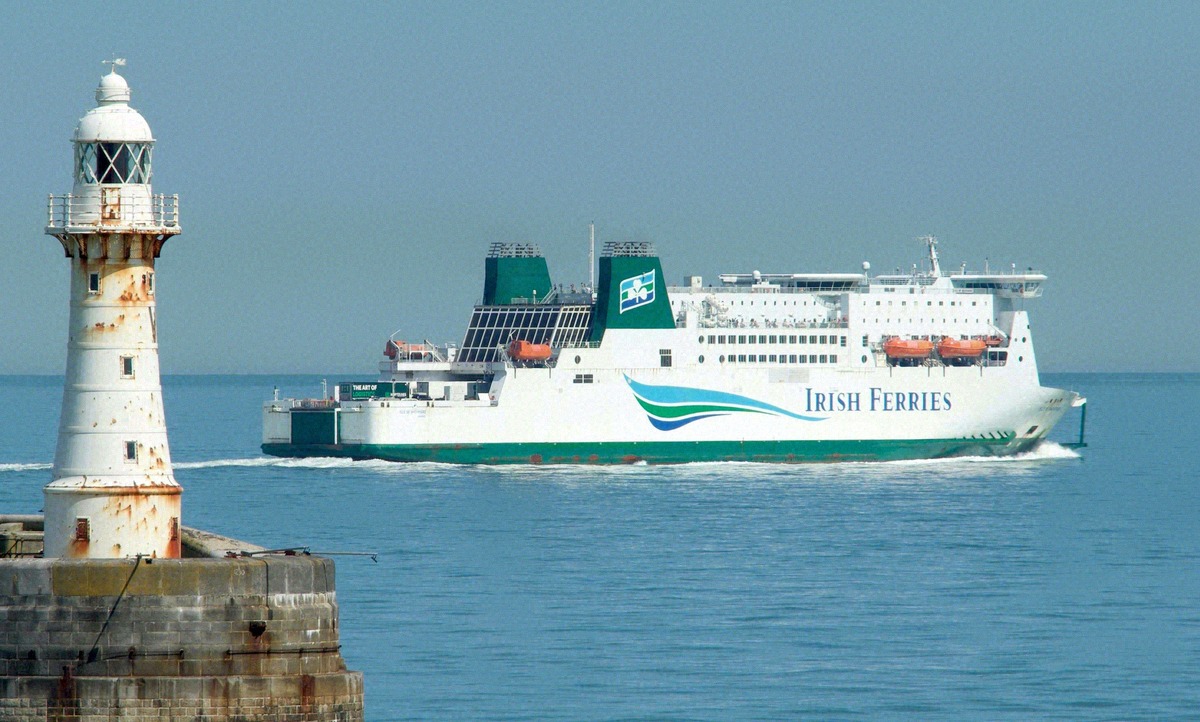
Planning the crossing from Calais to Dover
Table of Contents
The Calais to Dover ferry is the same route as the outbound crossing, run by the same three operators and ships, but the return leg works differently. Both border controls happen in France before you board, the clock goes back an hour on the way over, and in Dover you drive straight off the ship onto the A20. This page walks through the return in order, from the drive to Calais port to the first miles in England.
Departures for your date are in the Calais - Dover ferry times, where you switch the timetable to the return leg; the two directions have their own lists of sailings. Fares by vehicle and season are on prices.
Getting to Calais ferry port
Set your sat nav to 285 Avenue du Merite Maritime, 62100 Calais, or the coordinates 50.973217 N, 1.877369 E. The terminal is about ten minutes from the A16, which runs along the coast from Dunkirk and Belgium and from Boulogne; from Paris and Reims the A26 joins just south of the town. From either motorway, follow the "car ferry" signs rather than an exit number. They lead straight into the check-in lanes, which all three operators share.
Fuel up and do the last supermarket shop before you leave the motorway network; the Calais hypermarkets lie between port and motorway, but once you are in the check-in area, turning back is awkward. Without a car, the free Baladin shuttle runs from the town centre and the station to the terminal, Monday to Saturday from 8:00 to 19:00. The terminal itself, parking and the facilities while you wait are on the Calais ferry port page.
Check-in and the two border controls in Calais
The deadlines depend on your operator:
- P&O Ferries: plan for 90 minutes with a vehicle.
- DFDS: check-in closes 60 minutes before departure; in high season allow 120 minutes.
- Irish Ferries: 60 minutes for cars and motorhomes, 90 minutes with a pet or when you need assistance.
At Calais, check in with a vehicle at least an hour ahead, and up to two hours ahead in peak periods such as summer Saturdays, Easter and the year-end holidays.
After the kiosk come two border controls in a row, both on French soil: French exit control first, then UK Border Force, which runs the British entry checks in Calais. Everyone in the car needs a passport; national ID cards are no longer accepted for UK entry. Visa-free visitors, EU citizens included, also need a UK ETA, one per traveller. French minors leaving France without both parents need the signed AST parental authorisation, which is checked at exit control. Then you park in the numbered boarding lane and wait for the call. The full document list is on the check-in page.
On foot, the reliable option from Calais is P&O Ferries: tickets are sold online only, check-in closes 90 minutes before departure, and a shuttle takes you from the terminal building through both border checks to the ship. Bicycles, luggage and the process at both ports are on foot passengers.
Choosing the ticket for the return
The return leg uses the same fare ladders as the outbound crossing. P&O sells Standard, Standard Flexi and Fully Flexi, DFDS Economy and Premium with a 72-hour change window, and Irish Ferries Economy, Flexi and Flexi+, the last with Club Class. If the day of your return might still move, the change window matters more than a small fare difference.
A return booking is often cheaper than two singles, and Irish Ferries prices day returns particularly sharply. Price the whole trip in one search, because the cheapest operator changes by day and hour. If you miss your sailing, a flexible fare moves you to a later one; a restricted fare is tied to the booked departure. Fares and the rules behind them are on prices, the operators side by side on the operator comparison.
The crossing to Dover
The crossing takes around 90 minutes with P&O Ferries and Irish Ferries and around 100 minutes with DFDS. England is one hour behind France, so take an hour off the clock: a 90-minute sailing that leaves Calais at 12:00 reaches Dover at about 12:30 local time.
On board you have the ships of the outbound leg: P&O's Pioneer and Liberte, the DFDS Cote class with the Cote d'Opale, Irish Ferries' Oscar Wilde and Isle of Inishmore, with restaurants, duty-free shopping and lounges. Vehicle decks close for the crossing, so take up what you need. Dogs travel in the vehicle, in P&O's Pet Lounge or in Irish Ferries' Pet Den; for the return to Britain they need the vet's tapeworm treatment between 24 and 120 hours before arrival, recorded in the pet's document. The paperwork in full is on pets.
Arrival in Dover and onward
Passport control is already behind you, so in Dover you drive off at the Eastern Docks straight onto the A20 system. Canterbury is half an hour away and London about two hours, roughly 70 miles via the A20/M20 or the M2/A2. For the North, the M2/A2 keeps you off the London orbital until the M25. When cross-Channel traffic is disrupted, Operation Brock runs the M20 between junctions 8 and 9 as a contraflow at reduced speed.
Foot passengers disembark about 30 minutes after the ship docks and are shuttled to the terminal. From there, Dover Priory station is just over a mile away, by bus 66, taxi or a 25-minute walk, with high-speed trains to London St Pancras in about an hour. The roads and stations on both sides are on onward travel, the English terminal on Dover ferry port.
Checklist for the Calais side
- Passports for everyone, and a UK ETA for every visa-free traveller
- Booking reference ready, check-in deadline of your operator noted
- Up to two hours of buffer on summer Saturdays and holiday weekends
- Dog: tapeworm treatment 24 to 120 hours before arrival in Britain, recorded by the vet
- Fuel and shopping done before the "car ferry" signs
- On foot: a P&O ticket booked online; check-in closes 90 minutes before departure
If a gale or a strike disrupts sailings on the day, the operators' status pages and the Dover Strait forecast are on live updates and weather.
FAQ
Frequent questions about the Calais to Dover ferry
How long is the ferry from Calais to Dover? +
Around 90 minutes with P&O Ferries and Irish Ferries, around 100 minutes with DFDS. Because England is one hour behind France, the arrival time in Dover looks only about half an hour later than the departure from Calais. Sailings for your date are in the timetable.
How early do I need to be at Calais port? +
With a car, plan 90 minutes for P&O and 60 minutes for DFDS and Irish Ferries, 90 with Irish Ferries when a pet travels with you. On peak days such as summer Saturdays, allow up to two hours for the border queues. The deadlines per operator are on the check-in page.
Where do I go through UK passport control? +
In Calais, before boarding. After check-in you pass French exit control and then UK Border Force, so the passport checks are done before the ship leaves. Passports and the UK ETA are covered on the check-in page.
Can I take the ferry from Calais to Dover as a foot passenger? +
Yes, with P&O Ferries: tickets are sold online in advance, check-in closes 90 minutes before departure, and a shuttle takes you through the border checks to the ship. The process at both ports is on the foot passengers page.
What does my dog need for the return to Britain? +
A tapeworm treatment given by a vet between 24 and 120 hours before arrival in Great Britain, recorded in the pet's document, on top of the microchip and rabies vaccination. Book the French vet before the return sailing; the details are on the pets page.
Is a return ticket cheaper than two singles? +
Often it is, so price the whole trip in one booking before you buy two singles. Fares by vehicle and season are on the prices page.
Sailing back from Calais?
Compare the Calais to Dover sailings of all three operators and book your crossing.